Episode 124
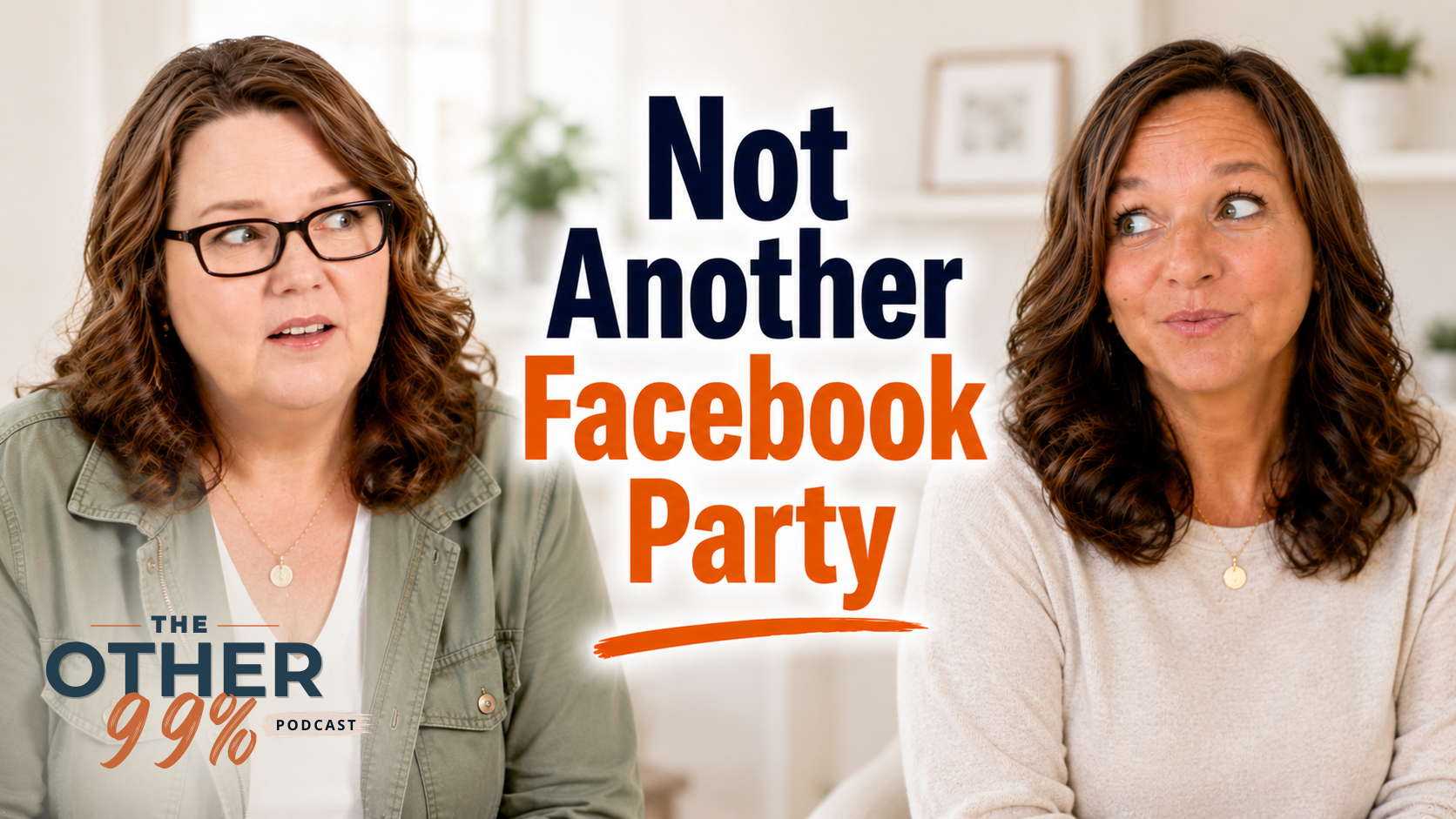
For years, Facebook parties were the go-to strategy for direct sellers. They offered a simple way to connect with customers, showcase products, and generate sales without leaving home.
But social media has changed.
Organic reach continues to decline, algorithms decide what people see, notifications constantly compete for attention, and customers are becoming increasingly overwhelmed by the noise. That’s why more direct sellers are beginning to ask an important question:
What if the party didn’t happen on social media at all?
While social media still plays a vital role in your business, the actual party experience may be far more effective when hosted on your own website.
Social Media Is Full of Distractions
Think about what happens when someone attends a Facebook party.
They’re scrolling through posts when suddenly:
- A friend tags them in a meme
- A message notification appears
- A new comment catches their attention
- Facebook suggests another video to watch
Before they know it, they’ve forgotten why they came to the party in the first place.
Every notification creates another opportunity for distraction. Even the most interested customer can quickly be pulled away from your content.
A website removes those distractions.
When visitors land on a dedicated party page, they’re there for one reason: to learn about your products, offers, and opportunities.
Your Website Gives You Complete Control
One of the biggest frustrations with social media is that you don’t control the experience.
Facebook decides:
- What people see first
- Which posts appear in their feed
- Whether your content gets shown at all
On your website, you control everything.
You decide:
- What visitors see first
- Which products to feature
- The order of information
- The customer journey from start to finish
Instead of hoping people see your content, you create an experience designed specifically to guide them through it.
A Better Customer Experience
One of the biggest mistakes direct sellers make is overwhelming customers with too many products and too much information.
A website party allows you to simplify.
Rather than showcasing your entire catalogue, focus on:
- Three to four featured products
- A short welcome video
- Clear shopping instructions
- One simple call to action
When customers aren’t overwhelmed by choices, they’re more likely to take action.
Branding Matters
When someone attends a party on Facebook, they’re surrounded by Facebook branding.
When someone visits your website, they’re surrounded by your brand.
Your colours.
Your messaging.
Your personality.
Your story.
A website immediately positions you as a business owner rather than simply another person posting in a Facebook group. It creates a more professional experience and helps build trust with potential customers.
The Hidden Benefit: Growing Your Email List
This may be the biggest advantage of all.
When someone joins a Facebook party, you often have very little information about them.
When someone joins a website party through an RSVP form, you can collect:
- Name
- Email address
- Phone number (if appropriate)
Now you’re building an audience you actually own.
Instead of relying on social media algorithms, you can continue the conversation through email, text marketing, and future follow-up campaigns.
Why RSVP Forms Are Non-Negotiable
If you decide to host parties on your website, there’s one thing you should never skip:
The RSVP form.
Without it, visitors can come and go without you knowing who attended.
With an RSVP form, you can:
- Track attendance
- Follow up with guests
- Identify who ordered
- Nurture those who didn’t purchase
- Build long-term relationships
Think of the RSVP form as the bridge between your website and your follow-up system. Without it, you’re missing valuable opportunities.
Social Media Still Has a Job
Let’s be clear.
This isn’t about abandoning social media.
Social media remains one of the best ways to:
- Start conversations
- Build curiosity
- Share stories
- Create engagement
- Invite people to your event
The difference is that social media becomes the invitation, while your website becomes the venue.
Instead of trying to host the entire experience on Facebook, use Facebook and Instagram to drive people to a distraction-free environment where they can focus on your products and offers.
Keep It Simple
If you’re considering website-based parties, remember these important guidelines:
Do:
- Keep pages clean and easy to navigate
- Feature only a handful of products
- Include a welcome video
- Make shopping links easy to find
- Use an RSVP form
- Focus on what’s in it for the customer
Don’t:
- Overwhelm visitors with too much information
- Use company jargon or abbreviations
- Hide your shopping links
- Make visitors hunt for important information
- Assume customers know your products as well as you do
Less really is more.
The Future of Direct Sales Parties
The reality is that social media platforms will continue to evolve. Algorithms will continue to change. Reach will continue to fluctuate.
Your website is the one place online that you truly control.
By creating a simple, focused party experience on your website, you can reduce distractions, strengthen your brand, build your email list, and create a better experience for your customers.
And that’s a party worth attending.
Listen to the Full Episode
Want to hear the full conversation and real-life examples?
Tune into this episode of The Other 99% Podcast where Lisa and Susan walk through their own YouTube journey and how they’re building their channels step by step.
🎧 Listen on

Leave a Reply